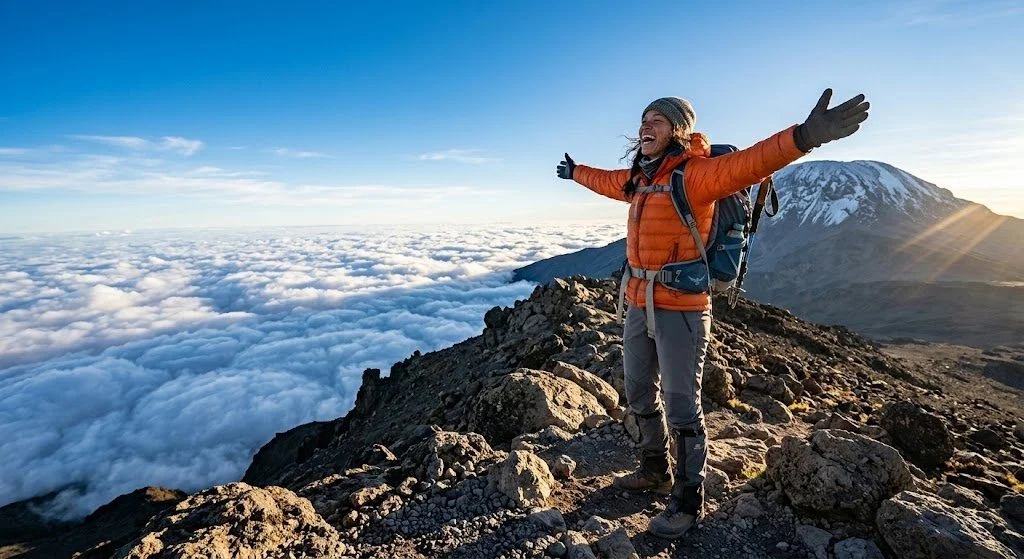
Africa's rooftop — the highest freestanding mountain on Earth.

From rainforest to alpine desert to glacier in a single week, Kilimanjaro is a walkable summit that takes you through five distinct climate zones. No technical climbing skill required — just fitness, the right route, and a slow, well-guided ascent.

Famous for reaching 5,895m without ropes or crampons, sweeping views across the Rift Valley, and the discipline of "pole pole" — going slowly enough to let your body acclimatize.
Africa's highest peak (5,895m)
No technical climbing needed
Five climate zones in one trek
Multiple route options
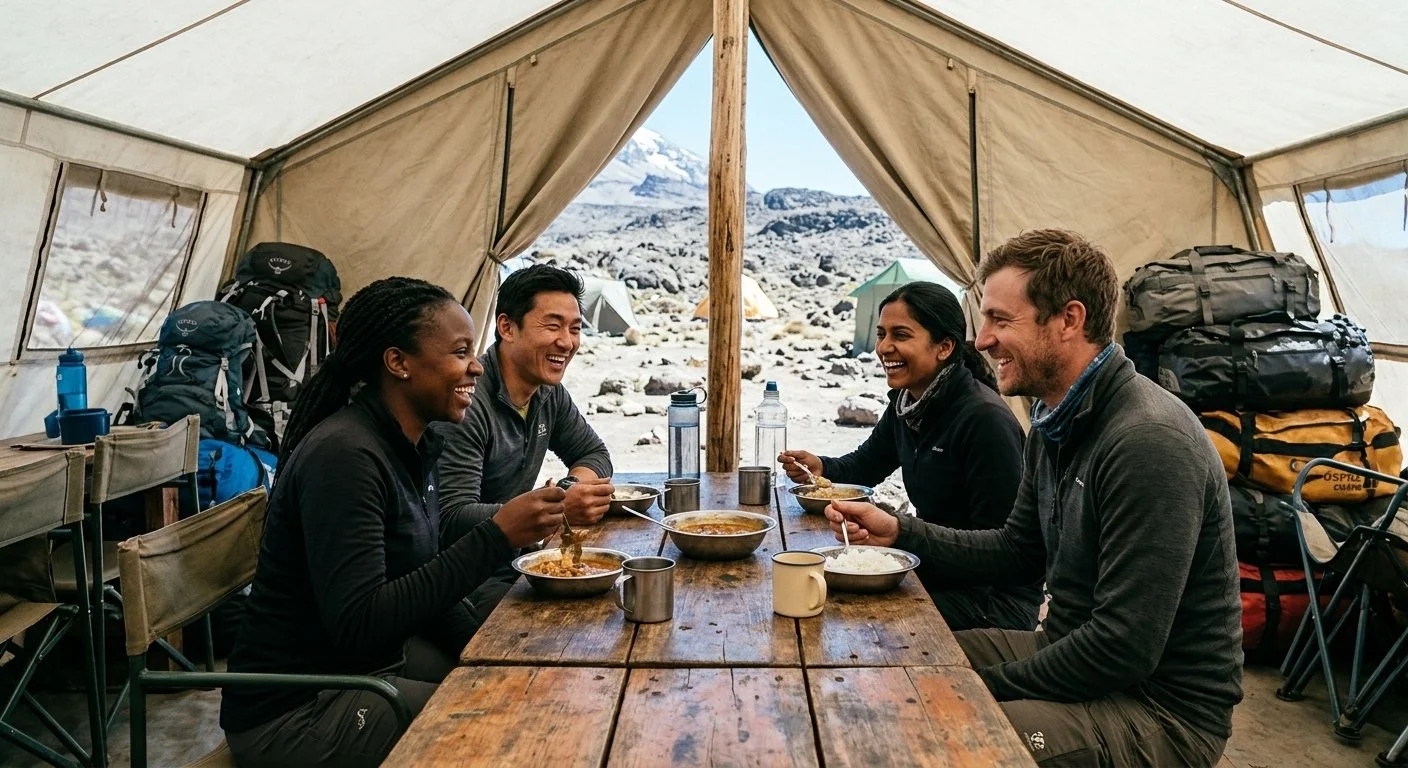
Full-service crew: guides, cooks & porters


Why It Matters

One of the Seven Summits, no ropes required

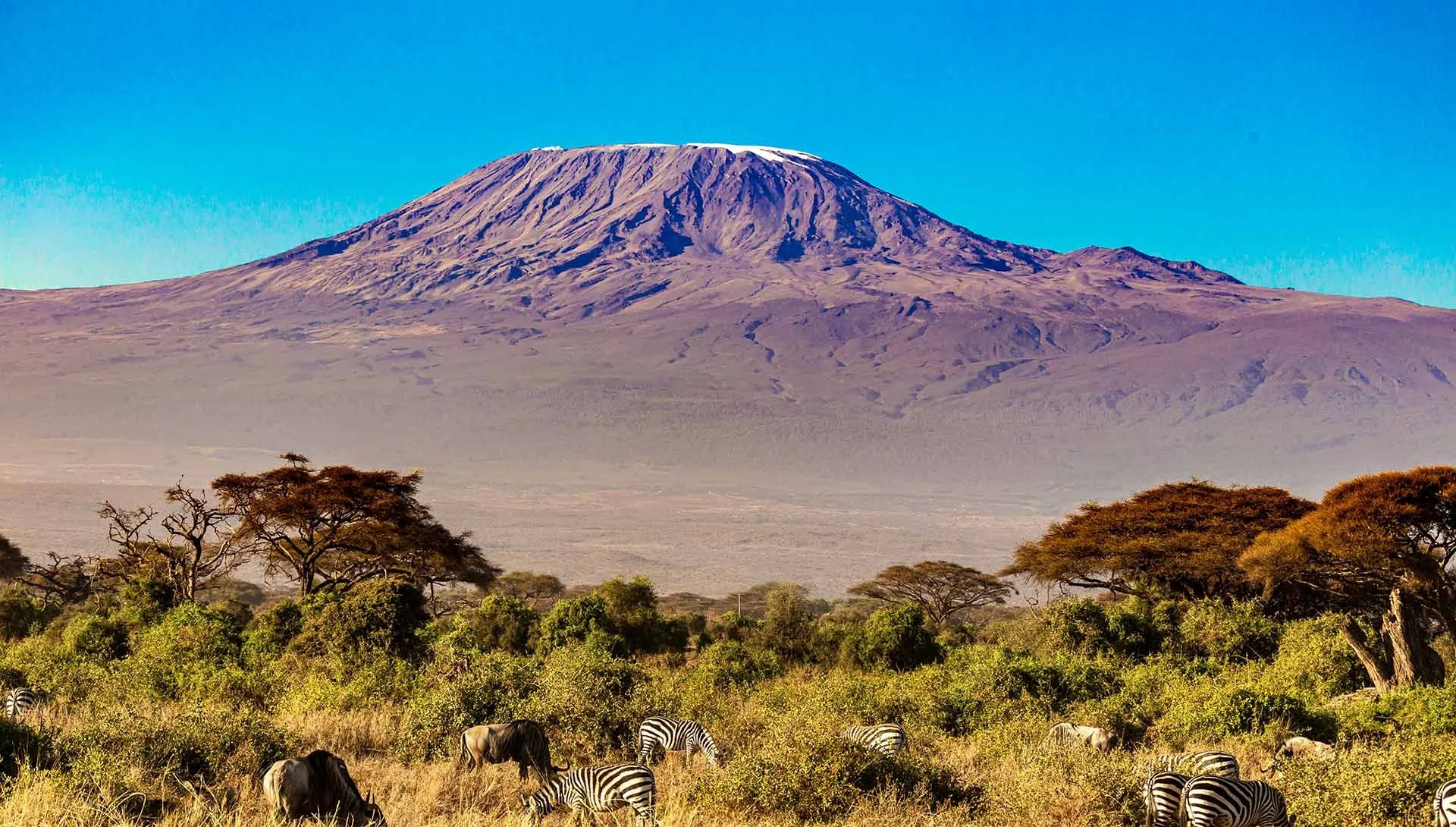
Kilimanjaro is one of the Seven Summits and the tallest freestanding mountain in the world, rising straight from savanna plains to a glaciated crater rim. Its accessibility — no ropes, no technical gear — makes it one of the most achievable major summits on Earth for a fit trekker.

Success comes down to route choice, acclimatization days, and the quality of your guiding team, not raw climbing skill.

Summit Elevation
5,895m / 19,341ft
Main Feature
Uhuru Peak
Conservation Status
National Park
Typical Duration
6–9 Days
The Approach

Choosing the right route matters more than fitness

Driving from Moshi or Arusha brings you to one of several trailheads, each leading through a different mix of rainforest, moorland, alpine desert, and summit scree.

Route Options
6 main routes
Success Rate
Higher on longer routes
Best Season
Jan–Mar & Jun–Oct

Acclimatization

Extra days on the mountain are the single biggest factor in reaching the summit comfortably.

How We Time It

We favor longer itineraries and routes with better acclimatization profiles over the fastest options.

A true test of patience and pacing — the mountain rewards those who go slowly.


Routes

Six paths to the roof of Africa

Each route offers a different balance of scenery, crowd levels, difficulty, and acclimatization time. We help match the right one to your fitness, schedule, and goals.

Machame
6–7 days
Lemosho
7–8 days
Marangu
5–6 days
Rongai
6–7 days
Northern Circuit
8–9 days
Umbwe
6 days
Summit Attempt
Night ascent
Accommodation
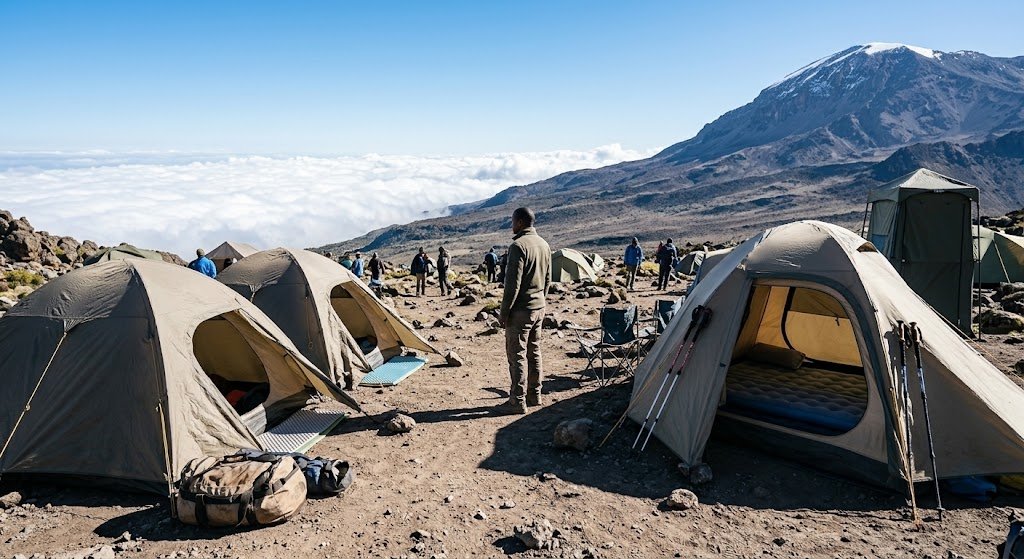
Tented camps / huts

Route Highlights

Popular choices for scenery and acclimatization.
  • Lemosho
  • Machame
  • Northern Circuit
  • Rongai

Worth Planning Around

Key factors for a strong summit attempt.
  • Extra acclimatization nights
  • Experienced, well-equipped crew
  • Flexible weather-based scheduling

Diverse terrain and multiple routes create a personal, well-paced ascent.

Rainforest, moorland & glacier.

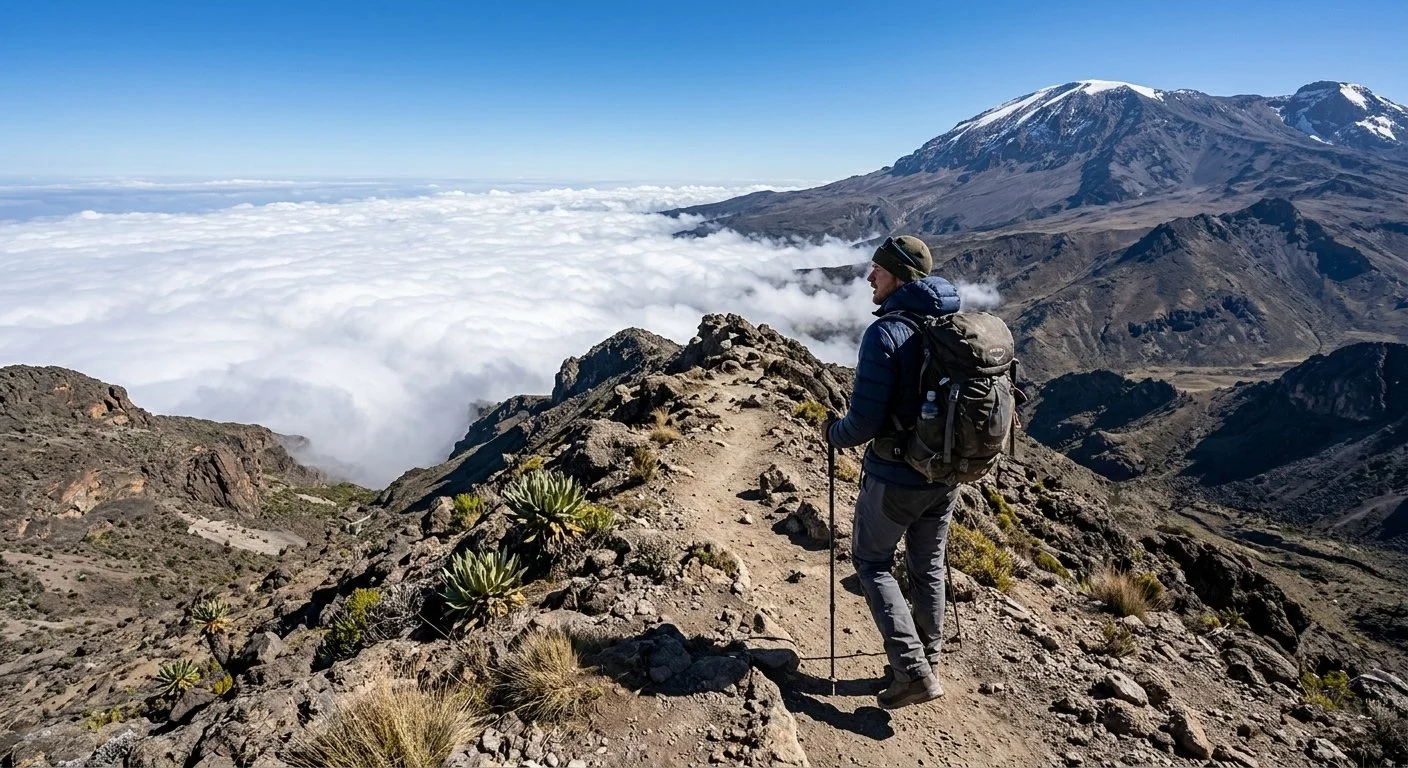
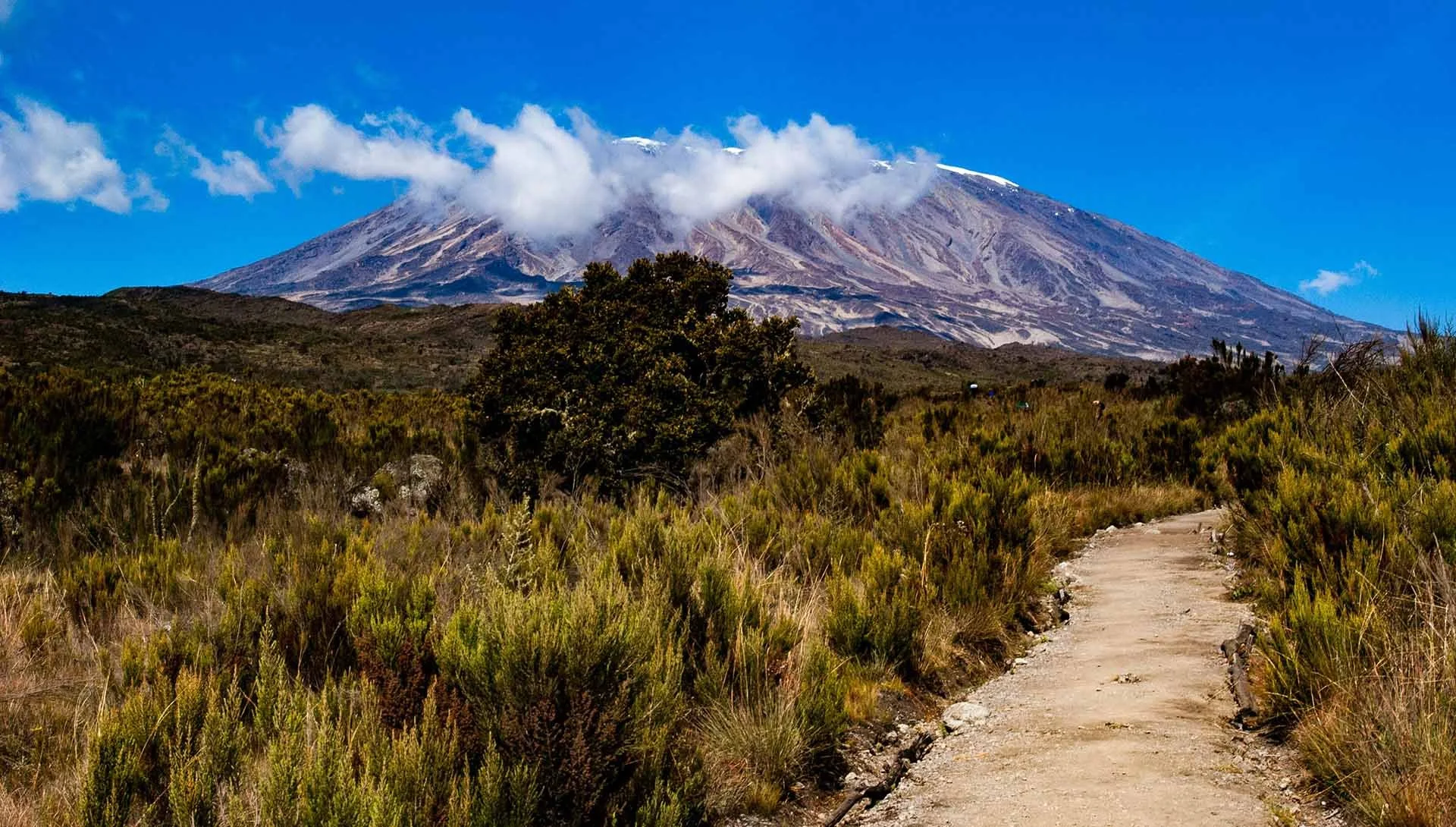
Lush montane rainforest gives way to open moorland, stark alpine desert, and finally an arctic summit zone of scree and glacial ice. The landscape changes completely every day or two.

  • Montane rainforest
  • Heath & moorland
  • Alpine desert
  • Volcanic scree slopes
  • Crater rim & glaciers
  • Summit ridge

The variety turns a single trek into a journey through five distinct ecosystems, making Kilimanjaro one of the most rewarding treks in the world.

A genuine mountain journey from jungle to ice.

Trekking trail and changing terrain on Mount Kilimanjaro

Where You'll Actually Go

Seven landmarks that define a Kilimanjaro trek

01

Uhuru Peak

The true summit, and the highest point on the African continent.

02

Shira Plateau

A vast high-altitude plateau with sweeping views on the western routes.

03

Barranco Wall

A scramble section that's the highlight day for many climbers.

04

Lava Tower

A dramatic volcanic rock formation used for acclimatization hikes.

05

Karanga Valley

A scenic camp between the Barranco Wall and base camp.

06

Stella Point

The crater rim milestone just before the final push to Uhuru.

07

Rainforest Trailheads

The lush lower-altitude start of nearly every route.

A single mountain offering a different experience on every route.

How We Build Your Climb

Ways we shape a Kilimanjaro itinerary around you

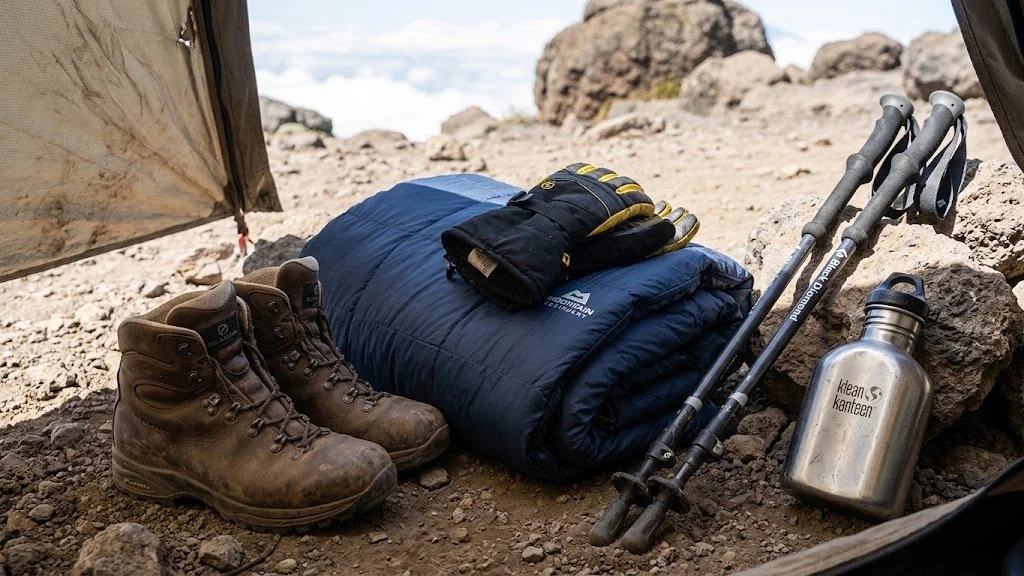
Full-service trekking crew

Guides, cooks, and porters handling logistics so you can focus on the climb.

Acclimatization hikes

Extra "climb high, sleep low" days built into longer routes.

Night summit push

A pre-dawn ascent timed to reach Uhuru Peak at sunrise.

Pre-climb briefing

Gear checks, health screening, and route planning before you start.

Post-summit recovery

A rest day or short safari extension after the descent.

Multiple ways to reach the roof of Africa safely and well-paced.


The Short Version

What You're Actually Getting

In One Line

Africa's highest peak, reached on foot through five climate zones with a full support crew.

Kilimanjaro offers a demanding but achievable summit for any well-prepared, reasonably fit trekker.

What You'll Pass Through

RainforestHeath & moorlandAlpine desertArctic summit zone
Colobus monkeysGiant lobeliasVolcanic screeGlacial ice
WaterfallsRock scramblesCrater rimSunrise views

Private & Custom

Same mountain, shaped around what you're here for

Combine route choice, acclimatization days, and crew size according to your fitness and schedule. We design the itinerary that gives you the best shot at the summit.

Tell us your priorities, and we'll build the Kilimanjaro climb that fits you — not a one-size-fits-all itinerary.

Highest summit success odds
Scenic, less-crowded routes
Faster itineraries
Comfort camping upgrades
Safari or Zanzibar add-on
Group or private climbs