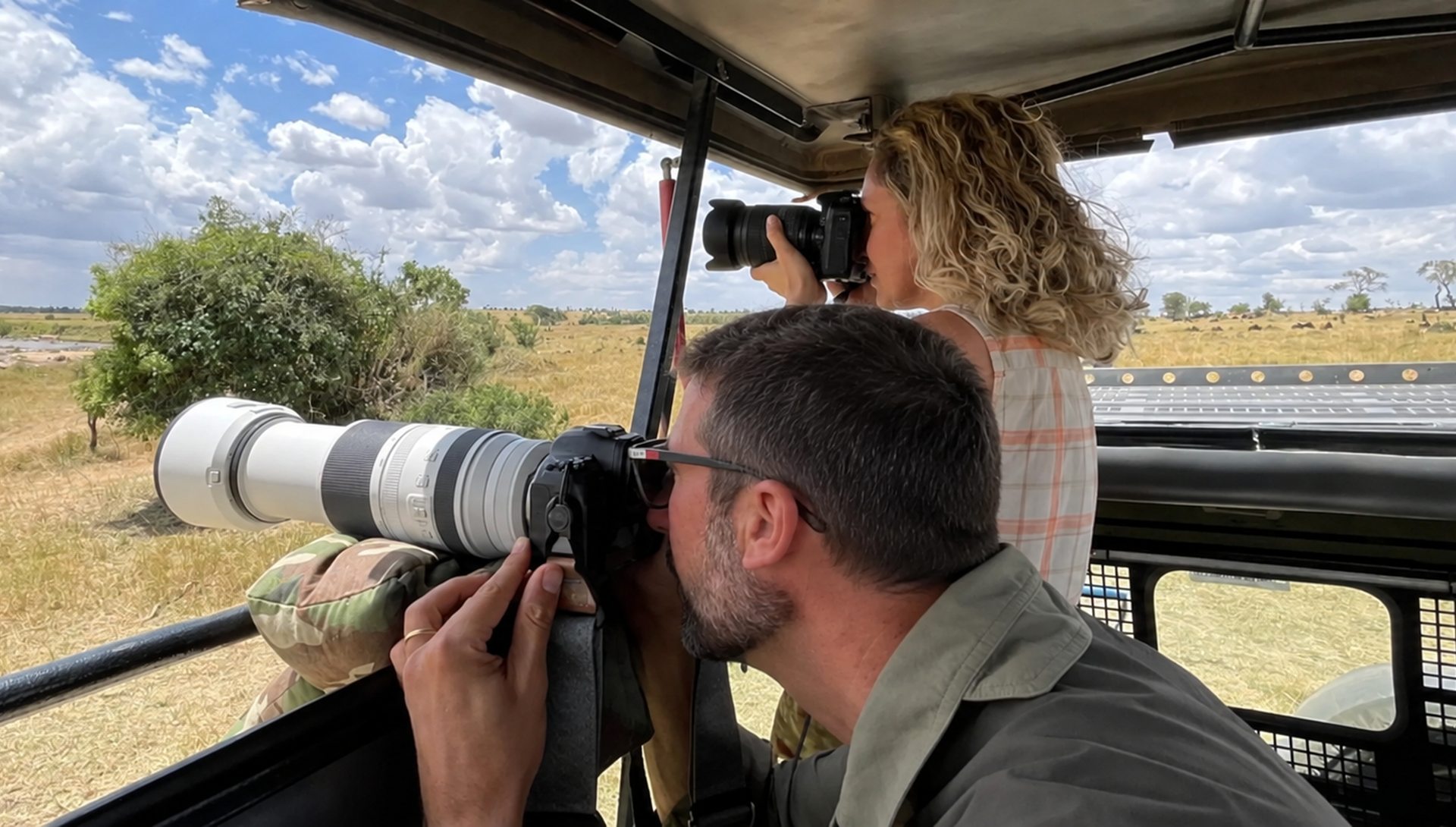
Tanzania Photography Safari

Chase the light. Follow the wildlife. Tell the story through your lens.

A Tanzania photography safari is designed for travelers who want more than simply seeing wildlife — they want to capture it.

From the thundering movement of wildebeest and zebra across the Serengeti to intimate predator portraits in the quiet of a photographic hide, Tanzania offers extraordinary opportunities for wildlife photographers.

Travel with experienced safari guides and wildlife trackers who understand animal behaviour, movement, light, and the landscape. Spend time waiting for the right moment rather than rushing from one sighting to another.

With carefully selected locations, flexible game drives, specialist photographic vehicles, and opportunities for hides and longer wildlife encounters, your safari becomes a journey built around the image.

Plan Your Photography Safari
Wildlife photography specialists
Great Migration photography
Professional tracker-guides
Photographic hides & unique viewpoints
Golden-hour & sunrise game drives


Why It Matters

The difference is time, position, and patience

A standard safari can give you unforgettable wildlife sightings. A photography safari is structured around making the most of them.

Wildlife does not perform on schedule. The best image may happen after an hour of waiting, when the light changes, an animal moves into position, or a predator suddenly becomes active.

Experienced tracker-guides help anticipate these moments while respecting wildlife and maintaining appropriate distances.

Your vehicle becomes a moving photography platform. Your guide considers the direction of the light, animal behaviour, background, positioning, and other vehicles before deciding where to stop.

Main Activity
Wildlife Photography
Signature Experience
Great Migration & Predator Photography
Guide Type
Tracker-Guide + Safari Guide
Typical Duration
5–10 Days
The Approach

The right location can make the photograph.

Tanzania's wildlife landscapes change dramatically between regions and seasons. The open plains of the Serengeti create expansive compositions, while kopjes, woodland, rivers, and grasslands provide different backgrounds and perspectives.

The timing of your safari matters too.

The dry season can concentrate wildlife around water, while the green season creates lush backgrounds, dramatic skies, newborn animals, and softer light.

Photography Regions
Multiple ecosystems
Best Light
Early Morning & Late Afternoon
Photography Style
Wildlife + Landscape

Guide Expertise

A skilled tracker-guide can help anticipate behaviour and position the vehicle without unnecessarily disturbing the animals.

How We Time It

Days are structured around wildlife activity and light, with early starts and flexible time in the field whenever conditions allow.

The photograph begins long before you press the shutter.


Tanzania's Photography Landscapes

Five environments. Endless frames.

Serengeti Plains

3–6 Days

Vast grasslands provide opportunities for wildlife portraits, environmental compositions, predator encounters, and Great Migration photography.

Southern Serengeti

2–4 Days

During the calving season, the plains can become a powerful setting for photographing newborn wildebeest, predators, and large herds.

Central Serengeti

2–4 Days

A year-round wildlife destination with rocky kopjes, grasslands, predators, and diverse photographic opportunities.

Northern Serengeti

2–4 Days

Dramatic landscapes and seasonal migration movements create opportunities for action photography and expansive wildlife scenes.

Ngorongoro

1–2 Days

The crater's concentrated wildlife and volcanic landscape provide opportunities for both wildlife and environmental photography.

Daily Rhythm: Pre-dawn departure • golden-hour photography • wildlife tracking • sunset photography
Accommodation: Luxury camps / photographic camps / mobile tented camps
The Great Migration Through Your Lens

Millions of hooves. One extraordinary story.

Few wildlife spectacles offer the scale of the Great Migration.

Across the Serengeti ecosystem, vast herds of wildebeest and zebra move in response to rainfall, grazing, and water availability.

A photography safari allows you to spend time anticipating the movement rather than simply witnessing it.

Capture wide environmental scenes showing the scale of the herds, tight portraits of individual animals, dust-filled movement, dramatic predator encounters, and the changing landscape around them.

During the calving season, newborn animals add another dimension to the story, while predators take advantage of the abundance of vulnerable young.

Don't just photograph the migration. Tell its story.

Photographic Hides

Get closer to the quiet moments.

Specialized photographic hides offer a different perspective from the safari vehicle.

Positioned carefully in appropriate wildlife areas, hides allow photographers to remain concealed while animals move naturally through their environment.

From low-angle perspectives to intimate portraits, hides can create images that are difficult to achieve during a conventional game drive.

Depending on location and regulations, opportunities may include photographing predators, elephants, birds, and other wildlife at relatively close range while maintaining appropriate wildlife-viewing practices.

Quiet position. Natural behaviour. A different perspective.

How We Build Your Photography Safari

Designed around the way you photograph.

Your journey should feel personal from beginning to end.

Specialist tracker-guides

Travel with guides who understand wildlife behaviour, tracks, movement, and photographic positioning.

Flexible game drives

Spend additional time with interesting subjects instead of following a rigid sightseeing schedule.

Photography vehicles

Selected vehicles can provide improved viewing and shooting positions depending on the location and operator.

Golden-hour opportunities

Prioritize early-morning and late-afternoon light for landscapes, portraits, and action.

Photographic hides

Where available and permitted, use specialist hides for low-profile wildlife photography.

Mobile photography camps

Stay close to seasonal wildlife movements while maintaining comfortable accommodation.

The goal isn't to collect sightings. It's to create photographs with a story.

When to Go

Every season tells a different photographic story.

January–March

The southern Serengeti can provide opportunities for photographing calving-season wildlife, predators, green landscapes, and dramatic skies.

April–May

The green season offers soft lighting, lush vegetation, dramatic cloudscapes, and fewer safari vehicles in key wildlife areas.

June–October

The classic dry season brings clearer sightings around water sources, crisp early light, and high activity along migration corridors.

November–December

Short rains bring new life, vibrant foliage, returning migratory birdlife, and excellent light conditions across the northern parks.

Ready to Capture Tanzania?

Let us help you design a bespoke photographic itinerary tailored around your gear, targets, and pace.

Plan Your Photography Safari